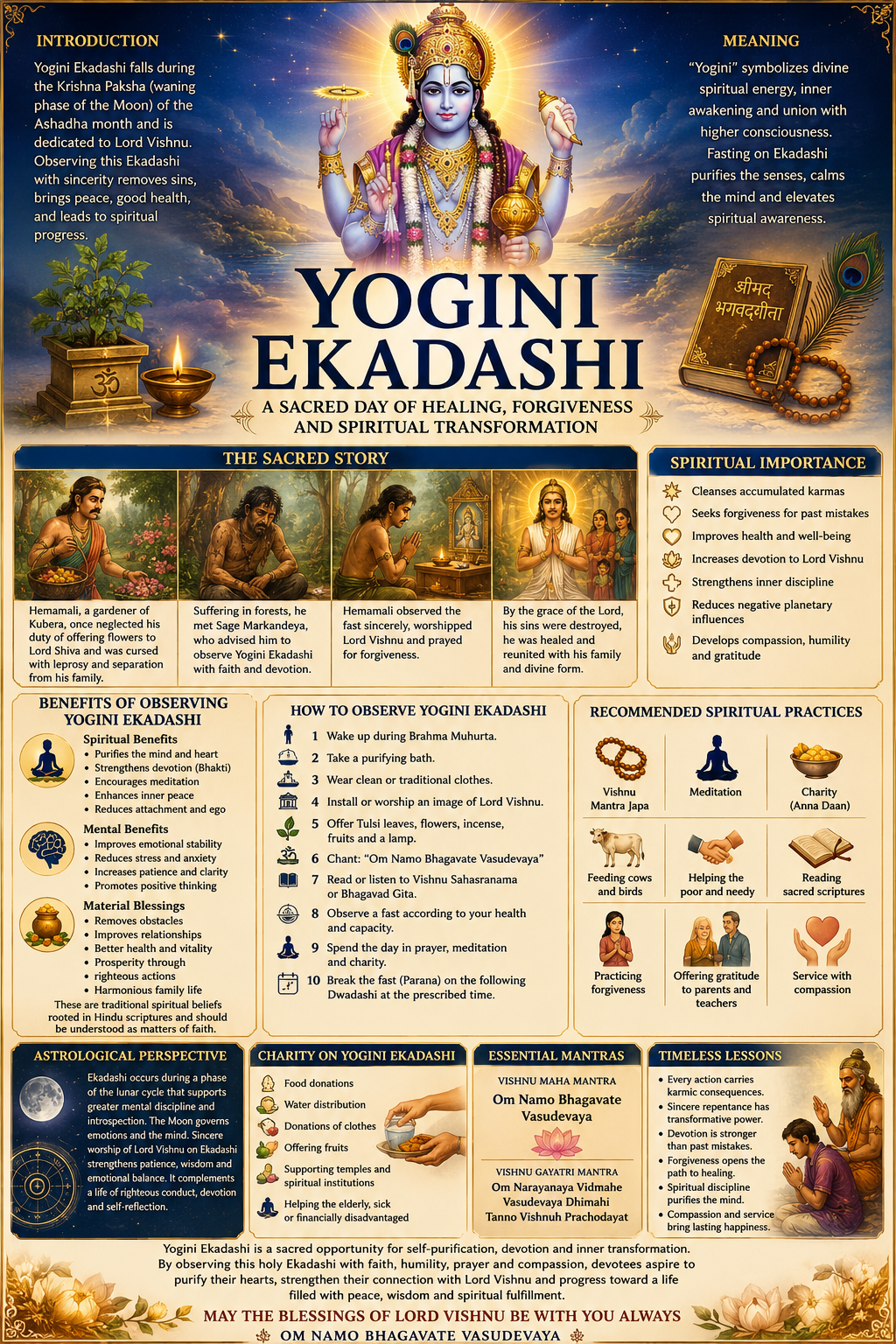
Yogini Ekadashi isn’t just another date on the Vedic calendar. Out of the 24 Ekadashis celebrated each year, this one stands out for its power to cleanse, heal, and help people break free from old karmas. It arrives during the Krishna Paksha—the waning moon—of Ashadha month. On this day, devotees turn their attention to Lord Vishnu, the protector of the universe.
The scriptures say that anyone who observes Yogini Ekadashi with genuine devotion gets a chance to shed their burdens—sins, worries, even illness—and find a deeper sense of peace. It’s believed to be a moment for scrubbing the soul clean and drawing closer to the Divine.
What’s Behind the Name?
The word “Yogini” speaks of awakening, inner energy, and the quest to be at one with a higher purpose. This Ekadashi is a reminder that chasing after things won’t bring true happiness; what matters is keeping your thoughts pure, doing what’s right, and staying devoted.
In the Vedic tradition, fasting on Ekadashi isn’t just about skipping meals. It’s a way to control your senses, quiet the mind, and tune in to something greater—if you do it with heart.
The Legend of Hemamali
There’s a story in the Brahma Vaivarta Purana that paints the spirit of Yogini Ekadashi perfectly. Long ago, Hemamali, a humble gardener, worked under Kubera, the god of wealth. Every day, his job was simple but sacred: pick fresh flowers for Lord Shiva’s worship. One day, caught up in the joy of his wife’s company, Hemamali forgot his duty and was late bringing the flowers. Kubera was furious and cursed him. From that moment, Hemamali found himself struck by leprosy and banished from everything he loved.
Wandering, suffering, he eventually crossed paths with sage Markandeya. The sage, full of compassion, listened to Hemamali’s troubles and advised him to follow Yogini Ekadashi with all his heart. Hemamali listened. He fasted, prayed to Lord Vishnu, and sought forgiveness. Little by little, he noticed his pain fading. In the end, his sickness vanished, and he was reunited with his family. The core lesson here is clear: when you own your mistakes, turn to devotion, and practice self-discipline, even the darkest situations can change.
Why Do People Observe Yogini Ekadashi?
On this day, seekers look for ways to:
– Wash away old karmas and regrets
– Ask forgiveness honestly
– Heal emotionally and physically
– Build a stronger connection to Lord Vishnu
– Become more disciplined inside and out
– Counteract harsh planetary influences
– Cultivate gratitude, humility, and kindness
Spiritual and Worldly Rewards
Scriptures and tradition say those who fast and pray on Yogini Ekadashi open themselves to all kinds of blessings:
Spiritually:
– A cleaner heart and mind
– More dedication and clarity during meditation
– Less ego and emotional baggage
– Greater acceptance and peace
Mentally:
– Calmer mood, less stress
– Greater patience and focus
– A more hopeful outlook
On the practical side, people also believe Yogini Ekadashi can:
– Remove obstacles from day-to-day life
– Heal relationships
– Support better health
– Bring prosperity when you act with integrity
– Bring families closer
Of course, these are matters of faith—meant to inspire, not promise, any specific outcome.
How to Observe Yogini Ekadashi?
Here’s how most devotees keep the day:
– Wake before sunrise (Brahma Muhurta)
– Bathe and dress simply or in tradition
– Set up an altar or image of Lord Vishnu
– Offer Tulsi, flowers, fruit, a lamp, and incense
– Chant “Om Namo Bhagavate Vasudevaya”
– Read the Vishnu Sahasranama or some Bhagavad Gita verses
– Fast according to your health and what’s possible for you
– Spend time in prayer, meditation, and charity
– Break the fast the next day at the right time (Dwadashi)
Special Practices
Yogini Ekadashi is an ideal day for:
– Repeating Vishnu mantras
– Meditating
– Donating food and essentials
– Feeding cows and birds
– Supporting people in need
– Reading sacred texts
– Practicing forgiveness
– Thanking your parents and elders
Looking Through the Astrological Lens
From a Vedic astrology perspective, Ekadashi lands during a lunar phase that supports focus and self-reflection. The Moon governs our emotions, so fasting and praying on these days help people step back from their cravings and look inward. Many believe it’s a way to build emotional strength, patience, and wisdom.
Ekadashi isn’t a substitute for other remedies, but more like a boost for anyone walking a spiritual path.
The Joy of Giving
Scriptures say charity done on Yogini Ekadashi brings lasting merit—especially when you do it quietly, with no strings attached. Food, water, clothes, fruit, helping temples, supporting the elderly or sick—any heartfelt kindness counts.
Essential Mantras
Vishnu Maha Mantra: “Om Namo Bhagavate Vasudevaya”
Vishnu Gayatri: “Om Narayanaya Vidmahe, Vasudevaya Dhimahi, Tanno Vishnuh Prachodayat”
Chanting these, even just a little, is said to bring serenity and a stronger spiritual foundation.
Timeless Wisdom from Yogini Ekadashi
– Everything you do matters—actions echo back
– Skipping responsibilities leads to pain
– Owning up and making amends changes things
– Devotion is stronger than any past mistake
– Forgiveness heals; holding onto grudges does not
– Discipline clears the mind
– Serving others and showing compassion is real happiness
Yogini Ekadashi is much more than skipping a few meals. It’s an invitation—to forgive yourself, to drop what no longer serves you, to reconnect with the Divine. The spirit of this day is about hope, inner cleaning, and beginning again with humility and grace.
May Lord Vishnu light your way with health, peace, and a loving heart.
“Om Namo Bhagavate Vasudevaya”