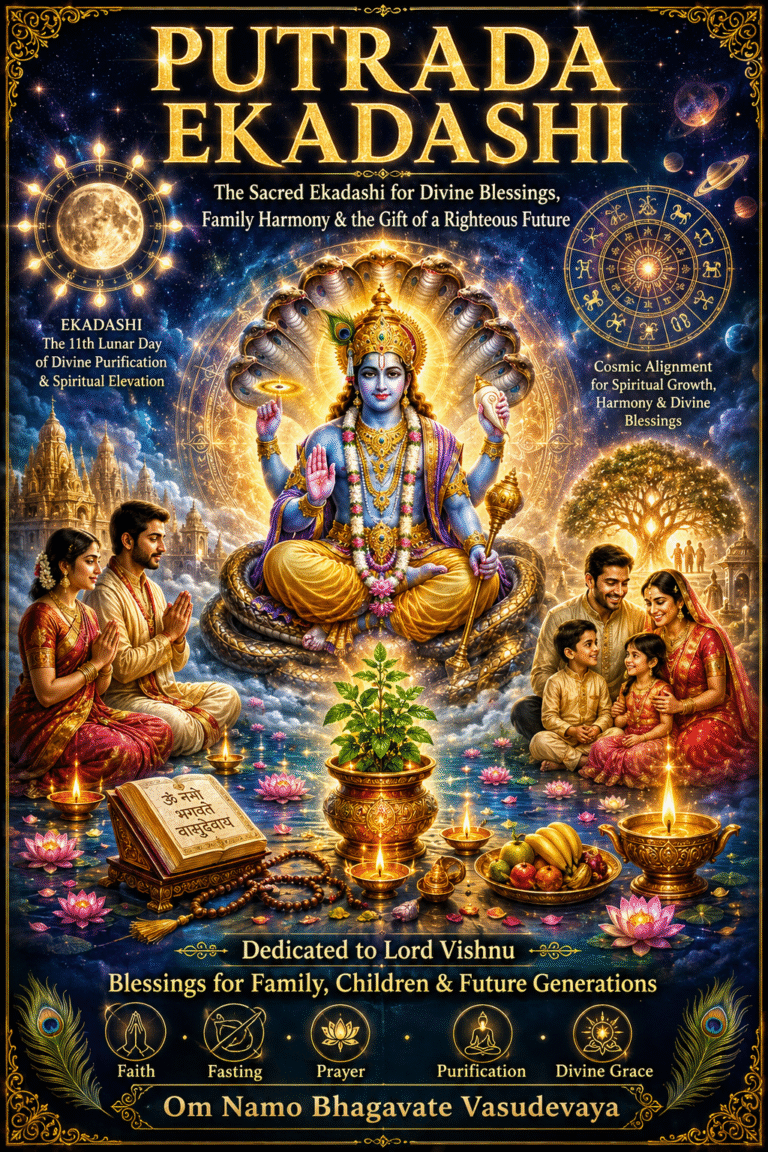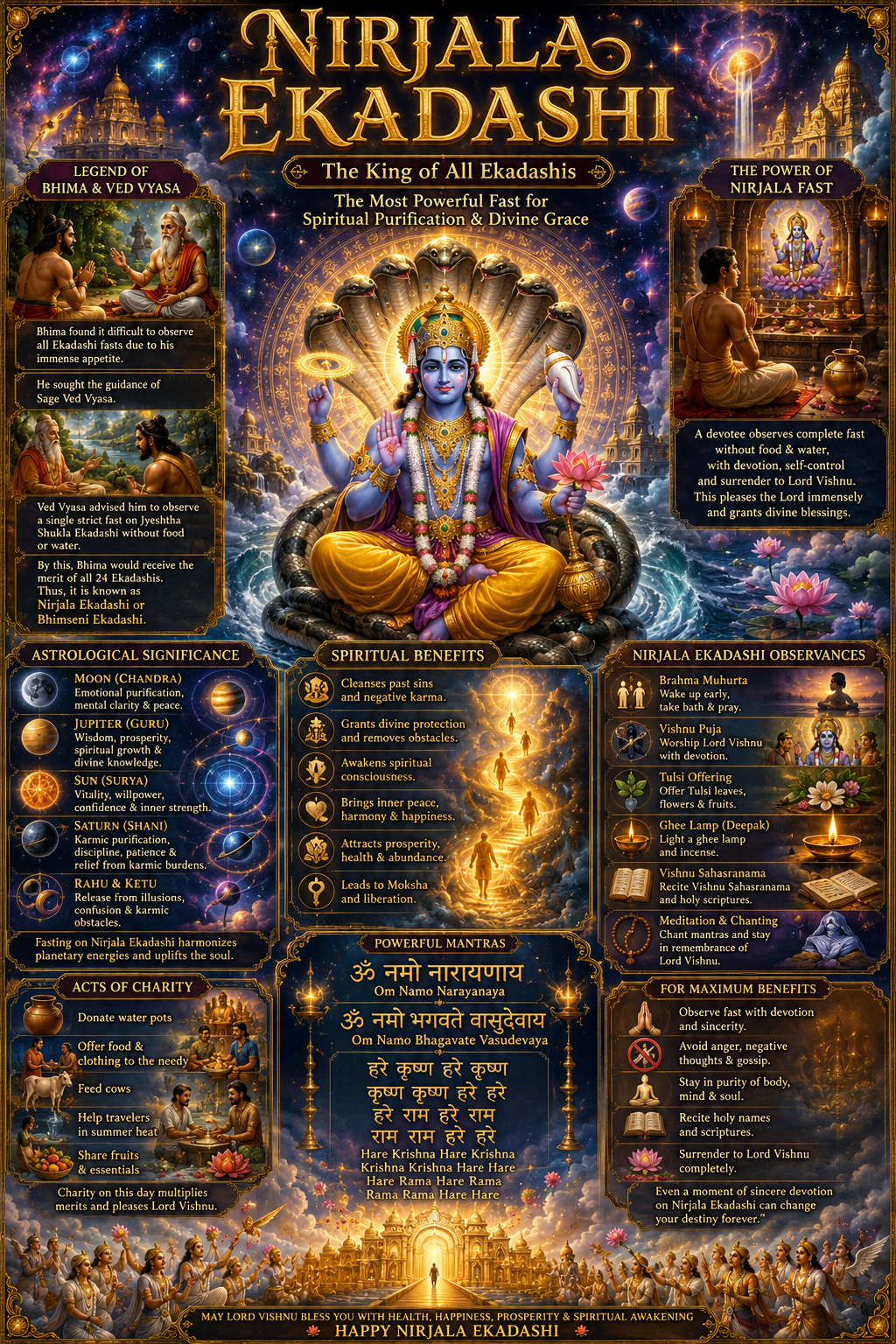
Out of the twenty-four Ekadashis scattered across the Hindu calendar, Nirjala Ekadashi stands alone. People call it the “King of Ekadashi’s,” and it’s not just for show—this day packs the power of every other Ekadashi combined. On Nirjala Ekadashi, everything sharpens. You’re not just skipping grains or eating light. You’re giving up food and water, completely, for a full day and night. It’s about surrender, deep discipline, and focusing all your energy on Lord Vishnu.
Vedic astrology and spiritual communities hold this fast in high regard for a reason. They say Nirjala Ekadashi wipes out thick layers of negative karma, lifts your spirit, and opens a door to real blessings if you’re willing to walk through it.
Why This Fast Exists?
The story behind it goes way back—all the way to the Mahabharata. Bhima, the strongest of the Pandavas, loved his food. Everyone else in his family could power through two dozen Ekadashis a year, but Bhima just couldn’t handle it. He turned to sage Ved Vyasa for help. Vyasa had a solution: Just do one Ekadashi, but do it with everything you’ve got—no food, no water, no wavering. Bhima tried it, and the rest is history. People still call Nirjala Ekadashi “Bhimseni Ekadashi,” in his honor.
Astrological Energy on Nirjala Ekadashi
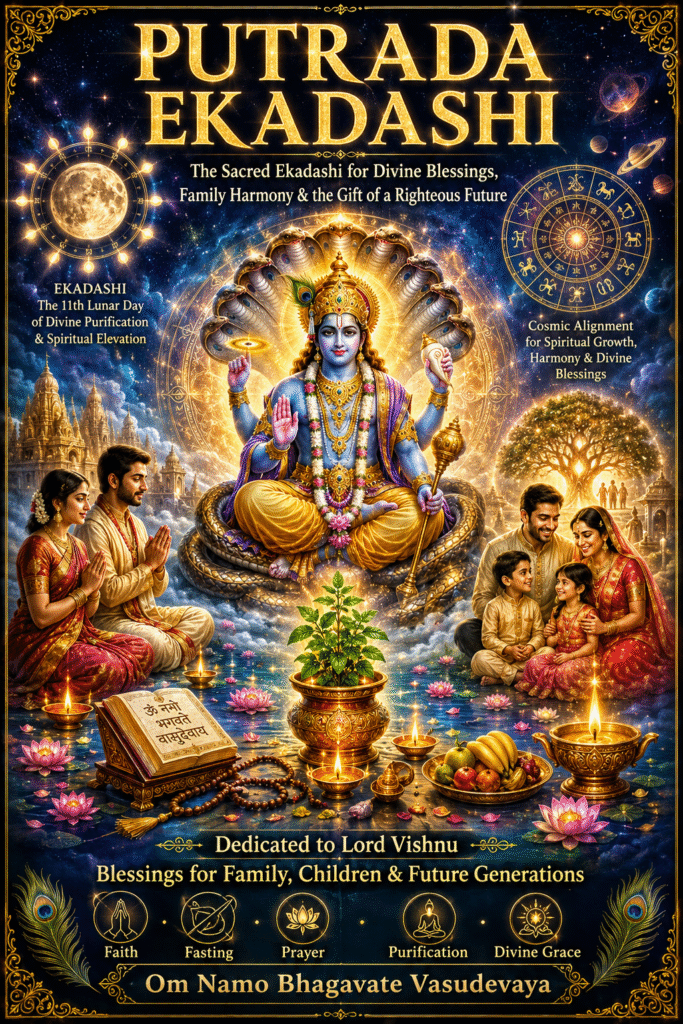
Ekadashi lands on the eleventh lunar day—the Moon’s at a special spot. The Moon is all about your mind, emotions, and the subtle stuff that goes on beneath the surface. On Ekadashi, cosmic energy gets lighter—like the mind is easier to clean up, emotions find balance, and the door cracks open for spiritual awakening.
But Nirjala Ekadashi cranks up those effects. Here’s how it connects with the planets:
Moon: Your mind feels clearer, emotions steady out.
Jupiter: Worshiping Vishnu on this day boosts wisdom, luck, and spiritual growth.
Sun: This fast demands real willpower. You come out of it stronger.
Saturn: Charity and self-restraint during the fast lighten your karmic load.
Rahu and Ketu: Spiritual focus dissolves confusion and tricky karma.
Spiritual Gains
Ancient texts list benefit after benefit, but to sum up:
Cleansing old karma—whatever you’ve been carrying, this helps lighten it.
Winning divine blessings—Vishnu notices the effort, and the blessings come.
Getting distance from your attachments—you care less about all the extras in life.
Feeling mentally lighter—the mind stops racing, and you feel calm.
Moving toward liberation—the soul gets a lift on its long journey.
How People Actually Do the Fast?
The day before, you eat simple, light food—no grains, no lentils, nothing too heavy or cooked with lots of spices. You keep your mind clear and focused on what you’re about to do.
On the day itself, the morning starts in the sacred Brahma Muhurta hours. Devotees bathe, wear fresh clothes, and set up their home altar with Tulsi leaves, yellow flowers, incense, ghee lamps—whatever you have. They chant Vishnu’s names, offer prayers, and, most of all, keep the focus on the divine.
No food. No water. If someone’s health doesn’t allow it, they find another way to honor the day (ideally, with a spiritual mentor’s guidance).
Charity: Make It Count
Fasting isn’t the whole story. Giving on Nirjala Ekadashi carries huge weight. Some offer water, umbrellas, clothes, food, fans—anything to help people cope with the hot season. There’s a belief that giving water to the thirsty now is about as close as you can get to pure merit.
Mantras That Matter
Chanting fills the day. People repeat the classic “Om Namo Narayanaya,” the Mahamantra (Hare Krishna, Hare Rama), or “Om Namo Bhagavate Vasudevaya.” This chanting isn’t just for show—with every repetition, the atmosphere feels different, lighter, and more open.
Boost Your Blessings with These Simple Rituals
If you want to strengthen the effects, keep it simple:
- Offer Tulsi leaves to Vishnu.
- Light a ghee lamp.
- Chant Vishnu Sahasranama.
- Donate yellow items or food.
- Feed cows if you can.
- Spend time in silence and meditation.
This isn’t superstition; it’s about focusing your mind and softening stubborn patterns that block you.
Why This Fast Hits Deeper?
Nirjala doesn’t just mean “without water.” The real idea is letting go—mastering your cravings, calming the senses, and remembering that the source of real strength and nourishment is spiritual, not physical. The fast trains you to realize you’re capable of more control, more faith, and more inner peace than you imagined.
Nirjala Ekadashi is more than skipping meals—it’s a reset button for body, mind, and soul. This is the toughest, most rewarding fast in the calendar, giving you a shot at releasing old baggage, drawing in fresh blessings, and walking a little closer to the divine. Whether you follow every rule by the book or do what you can, what really matters is the sincerity, the self-discipline, and the heart you put into it. Dedicating a day to prayer, giving, and reflection really does shift something. The peace and clarity you find? That’s no small thing.