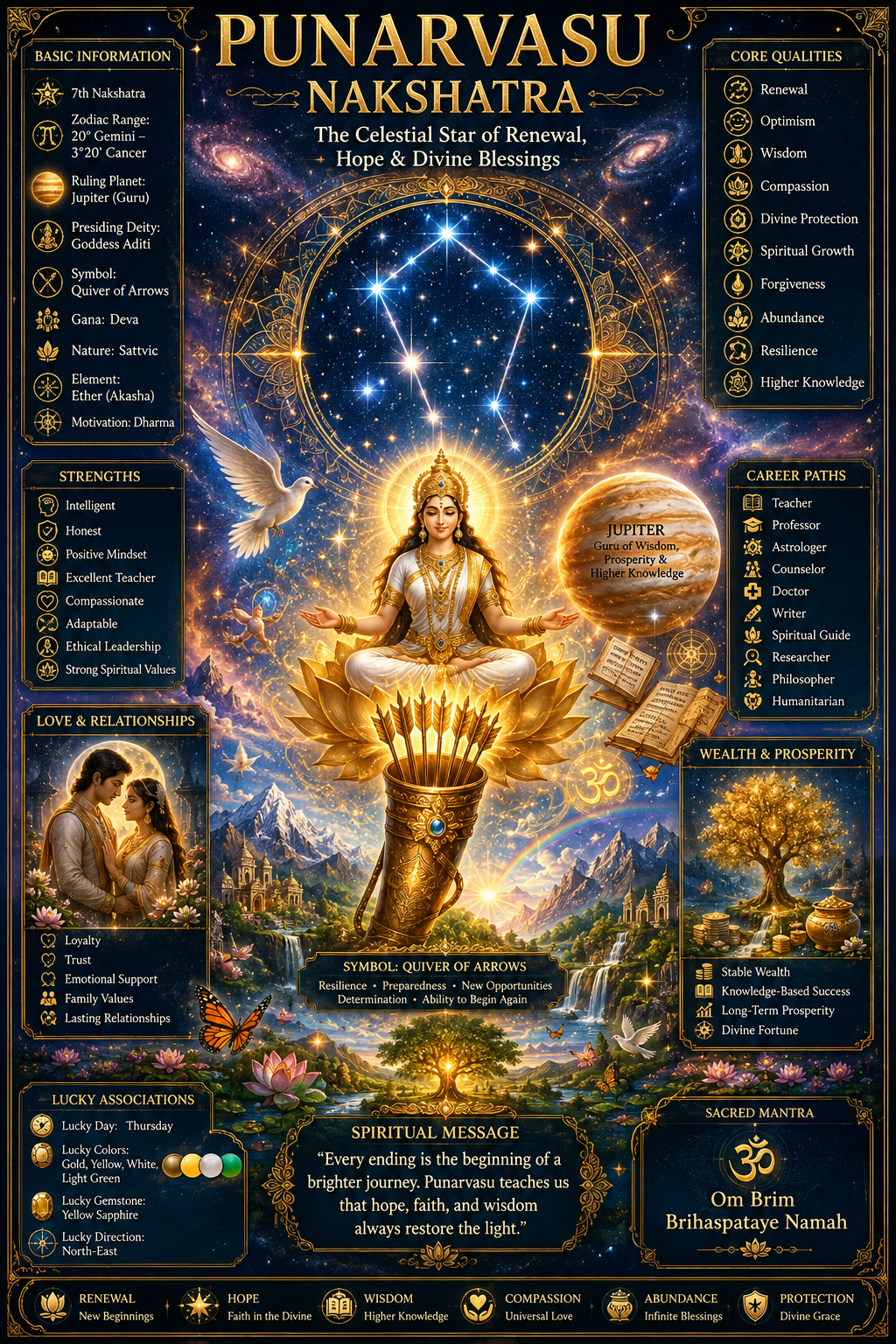
If you’re into Vedic astrology, Punarvasu Nakshatra sits right at the seventh spot among the lunar mansions—and honestly, it’s one of the most uplifting constellations. Its name pretty much says it all: “Punarvasu” means the light returns, things get restored, and the soul gets a second wind. The vibe here is about bouncing back, letting go of darkness, and starting over—with a little more wisdom than before.
People born under Punarvasu really know how to get back up after a fall. They have this optimism and resilience that’s almost contagious, and you’ll notice they’re gifted at sparking hope when things feel bleak. There’s also a huge streak of forgiveness and spiritual growth in them—like they genuinely believe everyone deserves another shot.
Let’s break down the basics. “Punar” means “again,” and “Vasu” is “light” or “prosperity.” So together, you’re looking at renewal, restoration, fresh starts, and that sense of being protected and hopeful after life throws you a curveball. The main lesson? Every ending opens room for something new.
Symbol-wise, Punarvasu isn’t about shooting a single arrow—it’s about the quiver. Imagine having plenty of arrows at your disposal; it stands for unlimited possibilities, readiness, and inner strength. Life under this star isn’t about getting just one chance. If you stumble? You just try again, armed with a bit more wisdom.
This nakshatra is watched over by Goddess Aditi—the cosmic mother in Vedic stories. She’s about infinite compassion, abundance, freedom, and that classic motherly care. People influenced by her are generous, forgiving, and always looking for ways to help.
Jupiter rules Punarvasu, and that changes the game. It pumps in intelligence, optimism, spiritual wisdom, and good fortune. You’ll see Punarvasu folks pick up knowledge quickly; they love learning and guiding others, and they keep searching for truth.
So, what’s a Punarvasu personality like? They’re naturally kind-hearted, honest, and open. Super optimistic, smart, and adaptable. They forgive easily, are patient, and communicate really well. You’ll often find them stepping into teaching, counseling, or mentoring roles because they lift folks up—they’re just that inspiring.
But no sign is perfect. Sometimes, these people put so much faith in others that they get let down. They’re almost too forgiving, struggle to say no, and carry other people’s burdens. Old habits or delayed successes might trip them up too. Setting healthy boundaries helps them thrive.
When it comes to work, think Jupiter: education, healing, mentoring, philosophy, law, writing, counseling, spiritual guidance. They gravitate towards professions where knowledge or teaching is at the center. You might find them as teachers, psychologists, spiritual leaders, judges, researchers, social workers, even diplomats or leaders of NGOs.
Love and relationships
Punarvasu folks are loyal, caring, patient, and genuinely supportive. They build relationships on trust, respect, emotional connection, and spiritual compatibility. They forgive quickly-which means they need to watch out for partners who take their kindness for granted.
Financially
They’re steady. Money comes from education, consulting, teaching, spiritual work, or international deals. They might not get rich overnight, but with discipline and wise choices, their finances tend to stabilize and grow over time.
For Health
They generally have good energy but should watch their digestion, liver, weight, and any stress-related issues. Keeping up with exercise, eating right, meditation, and enough sleep does wonders.
On the spiritual side
Punarvasu is all about awakening. Meditation, yoga, charity, studying sacred texts, and selfless service—it all flows naturally here. It reminds us abundance isn’t just outside; it starts within.
Strengths
Moral values, positive mindset, communication skills, resilience, adaptability, wisdom, and that knack for teaching or leading with compassion.
Weaknesses
Sometimes a little too trusting or forgiving. Emotional vulnerability creeps in, avoiding confrontation, holding on to the past, and building up unrealistic expectations.
The lucky stuff:
Jupiter’s the ruling planet, Goddess Aditi the deity. Colors like yellow, gold, white, light green. Yellow sapphire is the gemstone (after checking your astrology chart). North-East brings luck, Thursday is the lucky day, and “Om Brim Brihaspataye Namah” is the sacred mantra.
Each quarter—or “Pada”—brings its own flavor:
First Pada (Gemini): Courage, intelligence, ambition, energy, great communication.
Second Pada (Gemini): Practical, financially minded, artistic, stable, family-oriented.
Third Pada (Gemini/Cancer): Creative, intellectual, curious, teaching and writing talent, problem-solving.
Fourth Pada (Cancer): Highly emotional, compassionate, spiritual, protective, deeply intuitive.
What’s the life lesson?
Here every setback is temporary. Challenges are seeds for renewal, and when one door closes, another opens up—often brighter than before. Punarvasu is about resilience, gratitude, and believing in the bigger picture.
In the end, Punarvasu Nakshatra is this constellation of hope and restoration, blessed by Goddess Aditi and guided by Jupiter’s wisdom. People influenced by it aren’t just survivors—they’re light-spreaders, healers, teachers, and guides. Their journey shows that real abundance isn’t just about material stuff. It’s about wisdom, generosity, and having the guts to start over—again and again.